Tuesday, November 30, 2010

A Comedic Tragedy

               Every so often I have come across things in textbooks that make no sense to me, and that is no different for the classifications of drama.  Drama can be broadly split into two categories, comedy and tragedy, which I agree with, most movies- since that is as close to plays as teenagers see- fall into those categories.  It’s what those topics entail that I do not understand.  Comedies are supposed to highlight human failure to get the audience laughing while the tragedy is supposed to highlight human greatness.  I’m not sure what society is presenting now, but it doesn’t fall within that definition anymore, it seems backwards now.  Today’s comedies always end happy, I cannot think of a movie that made me laugh but left me disappointed with the main character and aware of its flaws or flaws in the human race.  I can’t think of a sad movie that I walked out of either that left me admiring the main character in anyway- I usually just want to forget about the story and move on.
                The arts we are presented with now seem much more black and white divided between these categories.  Comedies are funny, have happy endings and tie up all storylines.  Tragedies are usually not funny. More emotional and dramatic, and have a tendency to leave the viewer drained.  Think about the past few movies or- if you have had the opportunity- plays.  They wall within these new divisions don’t they?  Perhaps older plays follow this pattern closely, but for now, to me it seems that today this definition seems outdated.  Honestly, I am glad the ideas presented in these two types have changed.  I really don’t want to watch a comedy that makes me think about humanity or a tragedy that makes me cry, and perhaps that this is why the two have evolved.  Most people want mindless entertainment that they can walk out of happy-and I think I can live with that.
Emily S.

Sunday, November 28, 2010

THANKSGIVING BREAK :)

 I was assigned to blog during Thanksgiving break (yes!) so I decided to blog about Thanksgiving and what it really means.  Most people know the origins of Thanksgiving - the joint celebration between the Pilgrims and the Indians.  Many, however, don't know the deeper meaning of this holiday.  We have feasts and eat until we can't breathe anymore, without realizing why we feast and what it means.  Originally, the Indians saved the Pilgrims who had just arrived in Massachusetts, from starvation.  They helped them harvest and cultivate, which is why we have a feast on Thanksgiving day.  We also celebrate this day on the fourth thursday of every November because that signifies the day of harvest.  The help that the Indians gave the Pilgrims was so significant, and the Pilgrims were truly thankful, which is why the day is called Thanksgiving day not Feast day.  Beyond the delicious food and family gatherings, Thanksgiving is really about being grateful and appreciative of what we've been given, just as the Pilgrims were.  So even though Thanksgiving is over for this year, hopefully we'll be able to keep in mind for the next years to come, why we celebrate Thanksgiving, and not only look foward to the food and family, but really think about how blessed we all are in so many different ways.


<3 Lisa L.

Some Confusion, the Fusion to Make an Allusion, which Will Produce the absolute Conclusion

Words Words Words. " A unit of language, consisting of one or more spoken sounds or their written representation, that functions as a principal carrier of meaning." Words allow communication and the ability to express one's emotions. And when certain words are linked together they give meaning to actions whether it be in an expression, in a conversation, as a verb, adjective, noun, or can even describe other words. So why is it so hard to write an essay on words? 
1. There are too many words in the English language. 
2. The correct word for a specific event and emotion always seems to be replaceable by a better and greater word.
3. The ability to write beautiful poetic versus about three such charismatic, microscopic roots and/or affixes is pretty much one of the most confusing things I have ever done in English.


 (I think the essay would have come more naturally if we had just written about the word word.LOL)


But after thinking about what I wanted to write about, hidden emotions, I decided that this was a good opportunity to refresh my memory of how words can be manipulated to sway an emotion of the reader or question what is ethically or morally correct. This reminded me of reading Julius Caesar by William Shakespeare in Mr.Weidman's sophomore class, which is about Julius Caesar and Marcus Brutus in 44 BC and the events leading up to Caesar's assassination. The way Shakespeare presented his characters in a time of chaos is phenomenal because people begin to show their true colors. But when the reader looks at it more in depth, Brutus, being swayed by his peers to kill Julius Caesar, actually swayed the reader to think this is morally incorrect while still feeling sorry for Brutus. And when Marc Antony gave his inspirationally speech on finding and killing the assassins the audience is overcome by feelings of coming together as one and justice and unmorality for wanting to kill the killers. I had forgotten how Shakespeare had a way with words and a gift of one-liners. And after rereading this tragedy I recognized that there was a lot of repetition of words and reoccurring themes that were portrayed. I wanted to be able to write the 'word' essay and bring out emotions, although it word be nothing like Shakespeare's literature, at least it would still be an emotion-full work of literature.


So in the end I obviously wrote the three word essay which turned into a five word, four paged, three days of my life, two times falling asleep while writing, and one time submitting essay and I like it. So if anybody else had difficulties writing an essay on words your not alone.


-Vaness C.


Tuesday, November 16, 2010

Mary Shelley: a literary prodigee?

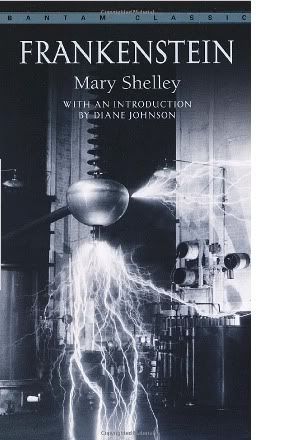
--Frankenstein is one of the most famous pieces of literature in all of history.  The weird part about it, is that Shelley created this story not for publishing, but to win a friendly competition between some of her peers.  As the manuscript was passed around, it eventually became publish; Shelley was only 21 years old.  How many 21 year olds do you know that write literature in such a way that it survives through the ages?
     This week in class, we have learned how to write Literary 3X3's.  These are tiny plot overviews consisting of three sentences, made up of only 3 words.  The guidelines consisted of no repeating words and expanded vocabulary.  By forcing us to use such few lines, but at the same time incorporating meaningful words, we really had to dig deep to find the right words to correctly describe the text we have read.  This also tied back into last weeks meaningful word study.  Here was our teams 3X3:
                                                    Knowledge inspires existance.
                                                    Thus comes fear.
                                                    Life implements death.
What was your team's literary 3X3?

Tuesday, November 2, 2010

All We Need Is Love

When Victor goes by himself up into the snowy mountains he unexpectedly runs into the monster he had created. As their conversation ensues I find myself feeling more empathetic towards the monster than Victor. The monster all but falls to his knees and pleads to his creator to love him yet the only emotion he recieves is pure hatred from the man who is supposed to have more humanity than he does. Victor, who was already becoming an increasingly bothersome character, is, in my opinion, even less of a human than the supposedly ugly and heartless monster. Though before I still had hope that he would end his egotistical rants, I now believe it is part of Shelley's message to leave him as is. So as the monster relates his whereabouts to Victor in the coming chapters, I will find it very surprising if Victor changes his mind about the creator he himself created.
-Sapir L.

Tuesday, October 26, 2010

Lupe-nstein

As I sat in my room listening to my iPod on shuffle, a song by Lupe Fiasco named "Cool" came on, and apparently this song was a prelude to his next album "The Cool," which has an unexpected meaning within it. It follows the story of a fictional character named "Michael Young" that surrendered his soul and life to "The Game," a character used to represent the search for fame in the "rap game" or trade and its dangers. Well what does this have to do with class? Following our most recent theme of life, death and rebirth in "Frankenstein" and in other pieces of literature in class, I decided to listen to this album and read its story with that idea in mind. Our main character, Michael Young is much like Frankenstein in the sense that he basically gives The Game his soul and surrenders himself to it like Frankenstein and his creation. When one surrenders his soul, temporary pleasure may come, but long term affects may alter him greatly. In return, Young is incorporated in the rap business. Later on in the story, however, The Game kills Young for falling in love with his girlfriend, "The Streets." Young is then reborn with multiple imperfections like a bare boned right hand and a liquor-ish odor. This also goes with the class theme that when man tries to alter the cycle of life and death (like Young when he's reborn) there will be consequences, much like the killing of the albatross in today's ballad. This punishment stays with young and does not heal, as if it was a deadly sin with numerous consequences to be revived as he was. Although many may not appreciate hip hop as much as others, it can be surprising how deep the lyrical content can be and how discreet the messages that the writers are conveying are.
-Nicholas B.

Tuesday, October 19, 2010

Solitude: Changing as Much as Technology

            If you are reading this, you are, in a way, communicating at this moment.  If you comment on this blog, then a conversation begins- even though we are not near each other.  Recently, we read an essay entitled, “The End of Solitude” which describes how in today’s world, more and more people are interconnected due to cell phones and internet.   If you have a Facebook page, simply being of the internet- as you are now- usually leads to a trip to your page.  This shows this increased connection with others as frequent Facebook trips lead to more comments, statues, and likes that others can read and then respond to- which shows that the idea presented in this essay is true.  When you are connected to people in this way, how can you be alone?
            That being said, it is possible to be alone in today’s world.  Solitude has changed; it is now feeling alone whether or not you really, physically are.  When in a crowded room or visible on Facebook chat, you can still feel alone.  This is where I disagree with the article.  It’s not the end of solitude; it’s the evolution of solitude.
Emily S.

Friday, October 15, 2010

To be of use...

      This week in class, we worked on a poem called "To Be of Use" and wrote a response to it.  I personally enjoyed the response because I rewrote the poem with the descriptions of the people I love.  Because I love writing poems, I also enjoy reading them.  I think it is fascinating that so much meaning and depth can be hidden inside of a poem that just seems confusing.  The idea that anything, even random animals, can be used to describe people, and describe them well, is amazing.  Reading a poem is like solving a puzzle - you have to really think about the figurative language and what it means.  But the funny thing is that the meaning of the poem is quite often given away in the title.  The title, "To be Of Use" is talking about the people that Marge Piercy loves, people who do something useful and meaningful with their lives.  Often times, people get so caught up in interpreting the poem that they forget the biggest hint is in the title - at least i do.  You see, there are so many aspects to reading and understanding a poem that it makes it a challenge, which makes if kind of fun.  Call me a nerd but I actually really enjoy the process of interpreting and understanding a poem. (:

                                                            <3 Lisa L.

Tuesday, October 5, 2010

Literary Period that Started it All

In the past few weeks, the students in Mrs. Elliott's AP Literature classes have begun to study the literary periods, starting with Middle English.  Yet there was a literary time period before this, ranging from 450-1200, known to us as the Old English time period, or the Anglo Saxon period.  This period named "Anglo-Saxon" for the early language spoke in the area we know to be England today.  Many of the most important pieces in forming English literature were written during this time and were meant to be performed.  The main characteristic of this style was that the pieces that fall into this genre were written in a way that those who read them could easily remember their contents.  One of the most famous is the epic Folk poem Beowulf, dated around 1000.  Other genres of the time include legal works, Biblical translations, and famous sermons.  Some believe that the texts of Old English were written to suit the needs of Christians.  Only 400 manuscripts written during this time survive today.  The foundations of most of the fundamentals of writing that we know today originated during this early time of literary exploration.

-Meredith K.

Tuesday, September 28, 2010

Victorian Era I Say NOT

Image a little blonde girl in a light etiquette dress pondering her actions while following a White Rabbit down a hole into a confused and hectic world. She sparks conversations with a ridiculous Duchess and talks to a mad hatter?as she makes her way through a magical Wonderland?Curiouser and curiouser.
The Victorian Era, 1832-1901, was a period of literary, social, political and religious movements. The social classes of England were newly reforming and the definition of what made someone a man or woman was was constantly changing. So it is no wonder why many people think that a man born in this era writing about a lost girl in a questioning land was considered to be a Victorian Child. Yea not so much. An average Victorian child was considered to be a lighthearted brat oblivious to corruption, sexuality, and the real world. Although Alice was based off of the conservative Alice Liddel, a little girl born in 1852 whom Carroll knew quite well, and Carroll's description of Alice's physical attributes is that of a child's during the nineteenth century, Alice does not fit into the 'norm' of this society. Throughout Alice's Adventures in Wonderland Alice encounters many obstacles confronting her about civilization's abuse of the system,it's negative actions, and switch in order. When the Queen of Hearts, which is not a reference to Queen Victoria, cries "OFF WITH THEIR HEADS" Alice is quite disturbed and scared for her life. She knows that this fait accompli which the Queen has sentenced is morally a wrong injustice.In all of these occurrences, Alice is well aware of what is taking place and is quite concerned. 
In the Victorian Era, children were not sexually in tune; they most like did not know what sex, puberty,and a menstrual cycle was.Like many, Alice,at the beginning of the story, did not understand; yet she wanted to be like her elegant, older sister whom she praised. Her sister is a woman who reads books,drinks teas and,I am assuming rides horses, and Alice idolizes her for that.As Alice continues on in Wonderland she wants the characters to view her as an intellectual that she is, not as a common, stupid child. Alice wants  people to see her as an adult and a matured woman. Carroll effectively used the color red often in the novel to express Alice's long for maturity. I believe the dripping red rose symbolizes her period which ties into the concept of sexuality...need I go into detail of this image. I hope NOT.
And yes Alice sounds like a conservative and yes she might somewhat look like an innocent little Victorian child, but if the definition of a child of this time period or one of George Elliot's writings sounds parallel to that of Alice's strong courageous nature then I believe you have the thought process of a Victorian child. But do tell if I say Not the correct depiction of the Victorian Era.
-Vaness C.

Tuesday, September 21, 2010

Our Inner Cheshire Cat

I LOVE CANDY. 
       When I was born I was lucky enough to inherit my mother's nose, my grandmother's eyes, my grandfather's skin, and ofcoarse, my father's sweet tooth. From my very first sugary sweet, cavity enticing, little delight, I was hooked. Yet to my surprise, my mom never regulated my candy consumption. I mean, when I was little she would make sure that I wasn't eating drastic amounts, but usually, to the envy of my friends, let me decide how much was enough. 
        The Cheshire cat, from its first appearance, provides a striking contrast to the rest of Wonderland. Unlike his fellow characters, the cheshire cat is able to remain calm and even give Alice rational advice. Historically, the cat has been attributed with both light and dark. The Egyptians believed the cat to be divine and even recongnized it as being holy. Yet, by the Middle Ages people began associating the cat with the devil. Either way the cat has always been an animal that held great power, with its greatest power perhaps being able to stimulate people's imaginations with its vast knowledge and curious physique.
         It is thus not astonishing that Carroll would choose the cat as the all-knowing mentor, yet what is interesting is that he would include a rational character in Wonderland at all. The simple answer is that the Cheshire cat is just a catalyst Carroll uses to move the story along before Alice becomes too far lost within Wonderland. Yet, in the bigger picture, I believe Carroll is telling his readers that no matter how mad life gets, we should always hold onto our voice of reason. If we stay calm we are all capable of making rational decisions, even when life turns into a Wonderland.
          Now that I'm older I realize that my mom chose not to supervise me too much so that I would determine how to supervise myself. Even for something as trivial as candy consumption, I needed to learn how to listen to my inner Cheshire cat.  

--Sapir L.


Tuesday, September 14, 2010

Wonderland is WONDERland for a Reason

In one of my Alice in Wonderland responses, I analyzed a quote by the duchess that read “If everybody minded their own business…the world would go around a deal faster than it does.” This quote conveys Lewis Carroll’s opinions on the way human nature causes us to question and wonder why things happen. In this response, however, I analyzed Carroll’s views on this topic, but never got to input my own personal opinions and views on this issue.
I’d like to explain that it is questioning alone that got the world to be as technologically advanced as it is today. It was the inventors that asked “What can I invent that would make daily life more easy and convenient?” It was the computer programmers that asked “What can we do to speed up our processors and improve our operating system?” It was the car manufacturers that asked “How can we optimize these cars for maximum safety?” Because of them, we have knives that can cut through steak like butter, we have computers that can access the information on the internet within seconds, and we have SRS airbags standard in almost every newly produced car. So tell me, Lewis Carroll, is it better to leave things alone and “mind [your] own business”? Or is it better to move forward and continue progressing the way society has?
I’d also like to point out that questioning the wrongs of our surroundings makes us wonder how we can fix them and improve ourselves. In the book, Alice continually points out flaws like the duchess’s failure to care for the baby or the hatter’s watch not telling the time of day. Alice does this throughout Wonderland and although she angers the residents of Wonderland, she has a point. What if we never wondered why the earth gets hotter and hotter every year? Then we would have never came up with the theory of global warming and the ideas on how to fix it. My point is that questioning the wrongs of society and wondering how to fix them is what makes us improve as human beings.
It is questioning and reasoning that sets us humans apart from other irrational animals on this planet. We should use that difference to our advantage and apply those skills to our lives, not let life go as it is and never work on improving it, which is what Carroll seems to believe in.

-Nick B.

Tuesday, September 7, 2010

High School Royaltea

      This blog is the center for our team, the Royalteas consisting of six senior students for our 2010-2011 AP Literature and Composition class. The basis of this blog will be ideas that arise from class work, discussions, and such. We drew numbers to see who would be the first to address cyberspace first, and that task has fallen to me.


      The past few weeks we have been learning about archetypes, and have been working on finding them in literature. An archetype is universal, and is said to come from the collective’s unconscious to resonate with the reader to develop meaning when found in a text. Some examples we have covered are snakes, gardens, water, journeys, and quests.


      I can’t help but feel that this year is more or less a perfect illustration of the archetype of a journey or quest. As our final year in high school begins, it feels more and more as if our journey in schooling is about to come to a close. Many will continue onto college, but what we have always known as traditional school is ending. Our quest to receive our diplomas ends in less than 175 days. Then, this metaphorical quest is done, and then what? Many of us will never see each other ever again after graduation. I’ve already had people tell me, “Oh, this is our last year to hang out.”


     I guess what I’m trying to say, is that I suppose school in a way is more connected to the idea of growing up and learning than this metaphorical quest, but most times it feels more like reaching for one prize-our diplomas or grades- than progressing.


     So, this is it. Our last year of high school to show what we have learned and to learn as much as possible before we journey out into the world on our own. This blog will record what we learn in just one class, but often these ideas will be reflected in our lives.


     Bring on senior year... and the tea.


     Emily